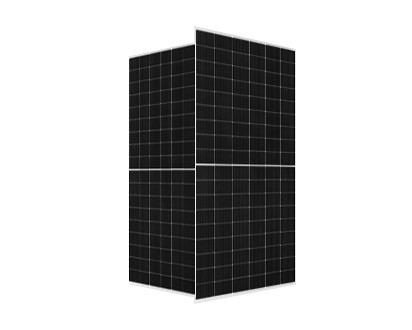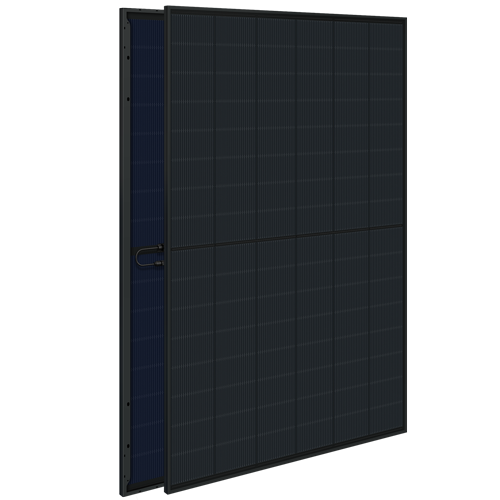
Astronergy Solar Panel
Specifications
Power Output: 440W (ASTRO N5s) and 475W (ASTRO N5)
Panel Efficiency: Up to 22.8% (445W) and up to 22.0% (475W)
Dimensions: 1722 × 1134 × 30 mm (445W) and 1908 × 1134 × 30 mm (475W)
Colour: Black frame; backsheet or glass design varies by model
Cell Technology: n-type TOPCon
Panel Design: Standard module (445W) and dual-glass module (475W)
Product Warranty: 15 to 25 years, depending on the model and region
Performance Warranty: 30 years linear, with output guaranteed at 87.4% by year 30
Note: Specifications and warranty terms depend on the exact model code and the Australian warranty document that applies. Please confirm these details before purchasing or installing.
Astronergy ASTRO N5s 440W Solar Panel
Specification
Model series: CHSM54N-HC (425 to 445W range)
Power output: 440W
Efficiency: Up to 22.8%
Dimensions: 1722 × 1134 × 30 mm
Weight: approx. 21 kg
Cells: 108 half-cut n-type TOPCon cells
Colour: Black frame (backsheet colour depends on the exact model)
Temperature coefficient (power): -0.29% per °C
Mechanical load rating: 2400 Pa wind load, 5400 Pa snow load
Warranty: 30-year linear power warranty, with the product warranty depending on the model
The ASTRO N5S 440W is the top-rated panel in the N5S range, packing strong output into a compact frame. Its n-type TOPCon cells collect sunlight and produce DC power, which your inverter turns into the AC power your home runs on.
At just over 1.7 metres long and about 21 kg, it is manageable for an installer to carry and position on the roof. An IP68 junction box keeps dust and water out of the electrical connections.
Astronergy ASTRO N5 475W Solar Panel
Specification
Model series: CHSM60N(DG)/F-HC (475 to 490W range)
Power output: 475W
Efficiency: Up to 22.0%
Dimensions: 1908 × 1134 × 30 mm
Weight: approx. 23 kg
Cells: 120 half-cut n-type TOPCon cells
Design: Dual-glass module (1.6 mm front and rear glass) with black frame
Temperature coefficient (power): -0.29% per °C
Warranty: Up to a 25-year product warranty and a 30-year linear power warranty, depending on the model
The ASTRO N5 475W delivers more watts per panel, which suits larger roof areas and higher energy needs. Glass on both the front and back adds rigidity and helps prevent moisture from reaching the cells. It is a longer panel, so the roof section needs enough clear space to take it. Because each panel does more work, the same system size can be reached with fewer panels on the roof.
How Households and Businesses Use Astronergy Panels
A rooftop system with Astronergy panels can do much more than lower your bill. Here is where the power goes:
Around the house: Your fridge, lights, air conditioner, washing machine, and other appliances run on solar power during daylight hours, before drawing any electricity from the grid.
At work: Shops, offices, and workshops that are busy during the day can use most of the power their panels produce right away.
After dark: A compatible battery stores the leftover midday power so you can use it in the evening instead of buying it from the grid.
On the road: If you own an electric vehicle, a compatible charger lets you charge using your own rooftop power.
Over the years, the savings continue for decades, as long as the system is checked regularly and kept clear of shade and dirt.
Why Choose Astronergy Solar Panels?
Newer cell design: n-type TOPCon cells are made to lose less power in the early months and years of use than older cell types.
Less loss in hot weather: A temperature coefficient of -0.29% per °C means output falls only slightly as panels heat up on a summer afternoon.
Efficient inside the panel: The SMBB cell layout directs current more smoothly through the cells, reducing small power losses.
Two panel sizes to pick from, a compact 440W and a larger 475W, let your installer fit the panel to your roof rather than forcing the roof to fit the panel.
Built to take a beating: The N5S is rated for 2400 Pa of wind load and 5400 Pa of snow load. The dual-glass N5 adds a second layer of protection against moisture.
Warranties that run for decades: A product warranty covers faults in how the panel was made. A separate 30-year power warranty guarantees a minimum output level as the panel ages.
Support close to home: Astronergy has a dedicated team looking after the Australian market.
What Makes Astronergy Stand Out?
Two panels can look identical on a roof and still perform very differently over time. These are the points that set Astronergy apart.
A name with real weight behind it: Astronergy is the solar arm of CHINT Group, a major global electrical equipment company. A warranty is only as good as the company standing behind it, and a large manufacturer gives you more confidence that it will still be there years from now.
Made for rooftops like ours: The ASTRO N5S was launched in Australia with local homes and businesses in mind. That focus shows in the compact size and easy handling.
Strong when the weather turns hot: Output dips as panels heat up, and Perth summers push panels hard. With its low temperature coefficient, this range loses less than many older designs.
More electricity from the same panel in year 20: Because n-type TOPCon cells degrade more slowly, the gap between a good panel and an average one widens with each year of use.
Quicker, safer installs: A lighter, compact panel like the 440W is easier to carry and fit, meaning less time on the roof and a tidier finish.
More power on a small roof: If your roof space is limited, a 475W panel lets you build a larger system without covering every available square metre.
Good panels still need good installation. Poor placement, shading, or loose wiring can waste the benefits of even the best product. We look at your roof, shade, and power use first, then choose the panel that fits.
Which Astronergy Panel Is Right for You?
Choose the 440W if your roof is a typical size, you want solid output, and you prefer a lighter, easier-to-handle panel.
Choose the 475W if you have a large, clear roof section, higher power usage, or plans to add a battery or an EV charger down the track.
Wattage is only one part of the decision. Roof space, shade, roof orientation, inverter compatibility, budget, and your daily power usage all affect which panel works best.
Before finalising any Australian installation, confirm the current datasheet, warranty terms, and local stock availability.