
How many solar panels are needed to power a house?

According to Solar 365 (solar installer) data and Australian government energy statistics, the average Australian household consumes around 16 to 20 kWh of electricity per day. To meet this energy demand, most households install approximately 15–20 solar panels. This number is generally enough to power a house, depending on panel efficiency and system size. However, homes in Perth, Western Australia, and Queensland may use more electricity due to higher air-conditioning usage.
The actual number of solar panels depends on your energy needs. If you use high-voltage appliances like a washing machine, pool pump, EV charger, heater, air conditioner, etc., you require a big solar system that fully fills your electricity needs. Australia receives a good amount of sunlight all year, so a solar system is a smart option for savings on electricity bills.
Also Read: 10 Most Efficient Solar Panels in Australia
Here is the full explanation of the solar panels needed and the solar system, which is the best for your home:
For a normal family home with 3–4 members
Electricity usage is typically around 15–25 kWh per day, depending on appliance use, air-conditioning, and lifestyle. To support this energy demand, many households install a 3–5 kW solar system.
3 kW Solar System
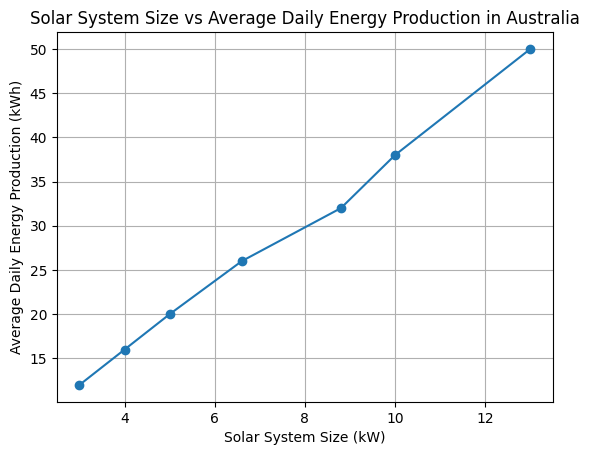
A 3 kW solar system usually uses 370–400 W solar panels and includes 8–9 panels. This system is suitable for small households with lower electricity usage. It can generate roughly 10–14 kWh of electricity per day under good sunlight conditions.
4 kW Solar System
A 4 kW solar system typically uses 370–400 W panels and includes around 10–11 solar panels. This system is ideal for medium electricity consumption homes and can produce approximately 14–18 kWh per day, depending on location and sunlight availability.
5 kW Solar System
A 5 kW solar system usually includes 370–400 W panels with about 12–14 panels in total. This system can generate around 18–22 kWh of electricity per day, making it suitable for average family homes with moderate electricity usage.
For a medium-sized family home with 5–8 members
Electricity usage is usually around 24–40 kWh per day, depending on appliances, air-conditioning use, and daily energy consumption. To support this level of energy demand, many households install a 6.6 kW solar system, which is one of the most common solar system sizes in Australia.
The number of solar panels in this system depends on the wattage of the panels used.
Panels for a 6.6 kW Solar System
6.6 kW solar system with 440 W panels includes approximately 15 solar panels
6.6 kW solar system with 450 W panels includes approximately 14–15 solar panels
Average Energy Generation
A 6.6 kW solar system can generate approximately 24–28 kWh of electricity per day on average in Australia, depending on sunlight conditions, roof orientation, and location.
For large family homes, offices, or small shops
Electricity usage is typically around 35–50 kWh per day, depending on the number of appliances, air-conditioning, equipment, and daily operations. To meet this level of energy demand, many properties install larger solar systems ranging from 8 kW to 13 kW.
Number of Panels by System Size
8.8 kW Solar System uses approximately 20 solar panels (440 W panels).
10 kW Solar System includes around 22–24 solar panels, depending on panel wattage.
13 kW Solar System includes approximately 28–30 solar panels with modern high-efficiency panels.
Every home has different energy needs. Don't worry, we can specially design a solar system according to your energy needs. In a solar system, not only are solar panels included, but an inverter and a battery are also included. If you want to store solar power, you have to have a battery. Then you use stored power in nightmares. Investing in a solar system is a smart deal, which saves your money from day one. You can receive credits on your electricity bills from an electricity retailer or company. If your solar system produces more energy than your home needs, it is sent back to the grid, and you receive credit on your bills. In the solar market, more efficient solar panels are present, which give 22- 24% energy to your home.
Solar System Size vs Average Daily Energy Production in Australia Chart
Frequently Asked Questions
Can I run AC with solar panels?
Yes, you can run AC with solar panels; it depends on your solar system size. If your solar system is capable of meeting your energy needs, then you can easily run AC with panels.
What is the lifespan of a solar panel?
Solar panels last 25-30 years with ga radual performance reduction. A solar panel’s efficiency decreases by about 0.5-1% every year. If we maintain it properly, it can last for 35 to 40 years. Solar panels need minimal maintenance. If you clean solar panels every 3 to 6 months using a wet cloth or a clean cloth, their lifespan increases. You can also get solar panel servicing done with the help of our Solar 365 team.