
Solar Panel Orientation Perth: Best Direction & Building Tips
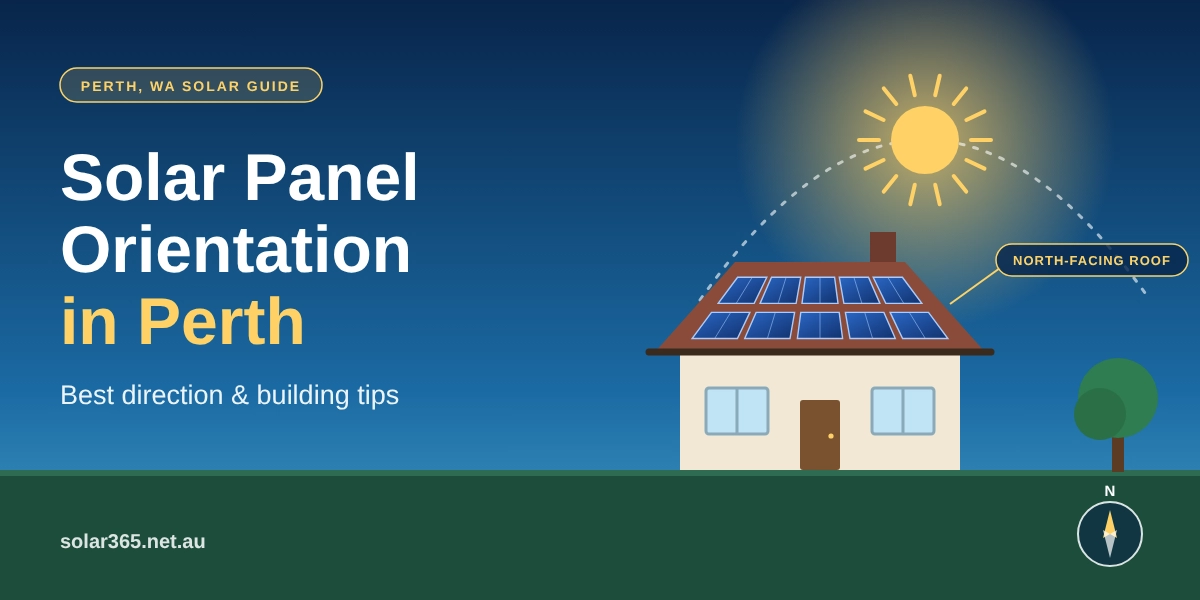
The best orientation of solar panels in Perth depends on your roof size, direction of sunlight, shading from trees, buildings, etc. All these factors affect your solar power. The building’s orientation, window placement, roof design, and shading all play important roles.
Position the Building to Capture More Sunlight
In Perth, the north side of buildings receives more sunlight. Living areas and frequently used rooms can be positioned towards the north where practical, allowing the building to benefit from natural light and winter sun. The way a building is positioned can significantly affect how effectively it uses sunlight.
Place Solar Panels in a Suitable Direction
Installing solar panels on the north face of the roof is the best way to maximise solar energy. East- and west-facing panels are also useful when household electricity consumption is higher in the morning or afternoon.
A well-planned building orientation helps reduce the need for artificial lighting and manage the property’s indoor temperature.
The best solar panel orientation should therefore be based on the property’s roof structure and electricity consumption, rather than simply choosing a single direction for every property.
For new buildings, considering solar access during the design stage can make it easier to create a property that works well with a future or existing solar system.
Consider the Roof Design
The roof design of a property is one of the most important factors when planning for solar panels. A roof with suitable space, pitch, and orientation can make installation easier and provide good access to sunlight.
A professional and experienced solar installer assesses the roof and determines which section is suitable for solar panels, as roof areas with skylights, vents, chimneys, or other equipment may reduce the available installation area.
Minimise Shading Around the Building
Shading from large trees, neighbouring buildings, chimneys, antennas, or other structures can reduce the performance of solar panels.
Before installing solar panels, check the property’s surroundings at different times of the day. A roof that receives plenty of sunlight in the morning may experience shading in the afternoon.
Use Windows Strategically
In a property, window placement can influence how much natural sunlight enters the building or home. In Perth, windows can be positioned to take advantage of useful sunlight, while appropriate shading devices can help control unwanted heat.
The window, located on the north side, can provide useful winter sunlight when designed appropriately. External shading, awnings, eaves, and blinds can help manage direct sunlight during warmer periods.
The goal is not simply to add more windows but to position and shade them according to the building’s orientation and climate.
Plan for Morning and Afternoon Energy Use
Electricity consumption patterns should be considered when deciding where to install solar panels.
If a household uses more electricity in the morning due to appliances, heating, cooking, or other activities, east-facing panels may help generate electricity earlier in the day.
If electricity use is higher in the afternoon because people return home from work or businesses continue operating later in the day, west-facing panels may provide useful generation during those hours.
A combination of different panel orientations may also be suitable where the roof design allows it.
Keep Future Solar Installation in Mind
If you are constructing a new home, commercial property, warehouse, or other building, planning for solar before construction can provide additional flexibility.
Consider leaving enough suitable roof space for panels, selecting an appropriate roof design, and identifying a practical location for the inverter and, if required, a battery.
Planning these elements early can reduce installation challenges later and help create a property that is ready for renewable energy.
Consider Battery Storage
Building orientation and solar panel direction are important, but energy storage can also influence how effectively a property uses solar power.
Solar panels generate electricity during daylight hours, while electricity consumption may continue after sunset. A battery can store some excess solar energy generated during the day and make it available later, depending on the system configuration and energy usage.
For properties with suitable energy consumption patterns, combining solar panels with battery storage can help increase the use of self-generated electricity.
Think About Roof Space Before Installation
Not every roof has the same amount of usable space. Roof sections may be divided by ridges, valleys, skylights, vents, air-conditioning equipment, or other structures.
Before choosing a solar system size, it is important to determine how much suitable roof area is actually available. The number and size of panels should be selected according to the available space as well as the property’s electrical requirements.
A solar professional can inspect the property and identify the most practical areas for panel placement.
Consider Perth’s Climate
Perth receives ample sunlight, making solar power a practical option for many residential and commercial properties. However, solar panels are exposed to Australian weather conditions year-round.
Panel positioning should allow the system to receive sufficient sunlight while also considering roof access, installation quality, ventilation, and long-term maintenance.
A properly planned installation can help the system operate reliably throughout the year.
Choose the Right Solar System Size
Orientation is only one part of designing an effective solar system. The system size should also match the property’s electricity consumption.
A household with higher electricity usage may require a larger solar system than a smaller home. Similarly, businesses with significant daytime electricity demand may benefit from a larger commercial solar installation.
Your electricity bills and consumption history can help determine the appropriate system size.
Get a Professional Solar Assessment
Every property is different, so there is no single panel direction or building orientation that works perfectly for every Perth property.
A professional solar assessment can consider roof direction, roof pitch, shading, available space, electricity usage, panel placement, inverter requirements, and future energy needs.
At Solar 365, our team can assess your property and help you understand the most suitable solar solution for your energy requirements.
Final Thoughts
Properly orienting a building to benefit from solar power is very important. Orienting does not just mean facing the roof towards the sun. In Perth, north-facing solar panels generally generate more energy than east- or west-facing panels. The right solution ultimately depends on the individual property.