
Leasing vs Buying Solar Panels: Which option is right for homeowners
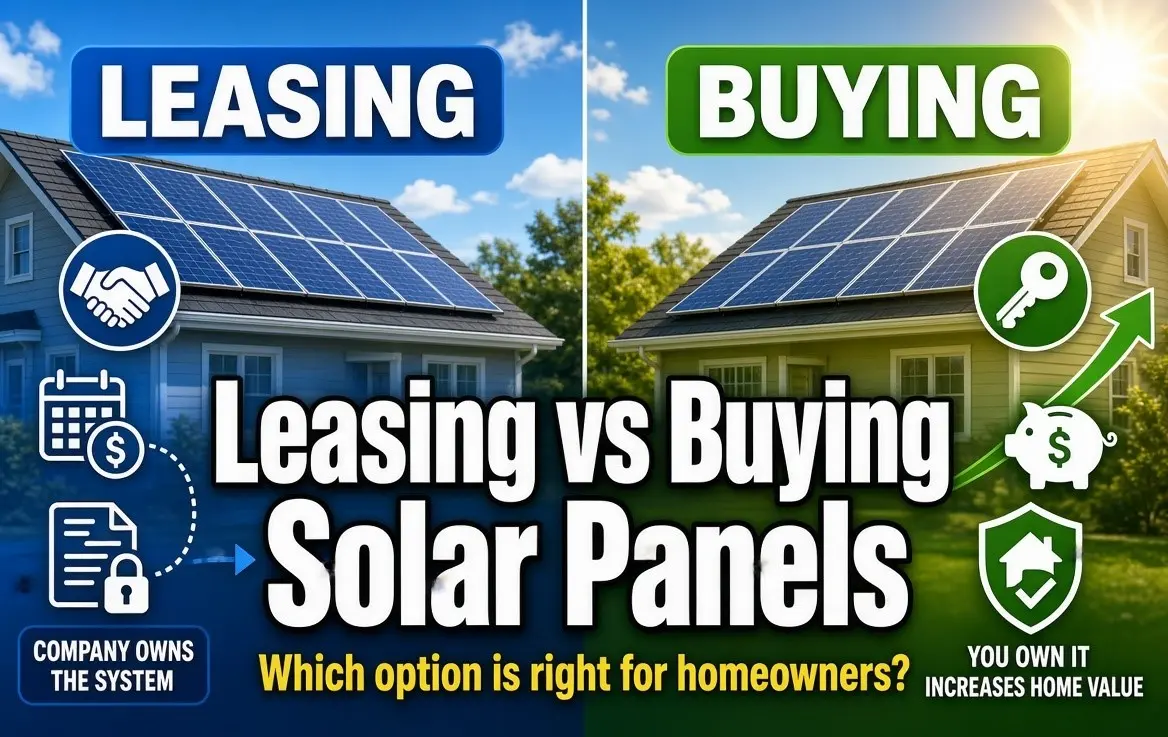
Leasing and buying solar panels are both right, but it depends on your budget and energy plans.
Consider the upfront cost, long-term savings, ownership, and maintenance responsibilities before making a decision. For homeowners planning to stay in their property for many years, buying may offer greater long-term value.
What Does Buying Solar Panels Mean?
When you buy solar equipment from any certified solar installer, the costs include solar products like solar panels, solar inverters, and solar batteries; installation costs; extras; your electrical board and location; and roof space.
Buying solar panels is a long-term investment: you invest once and save money for life.
One of the main advantages of ownership is that you can benefit from the system throughout its operating life without making further lease payments. You are also generally responsible for system maintenance and for any issues that fall outside the applicable warranties.
When your solar panels produce electricity for your home's appliances, you save money on your electricity bills and help make the environment carbon-free by using renewable energy.
If you plan to sell your home or property in the future and have already installed solar panels, the solar system can add value to your property. You can factor the solar installation into the overall selling price, which may provide an additional financial benefit when you sell.
How Does Solar Leasing Work?
A provider owns the solar system and has installed it on your property. Instead of purchasing the system, you agree to make regular payments under the lease.
The arrangement varies between providers. Some agreements include maintenance or servicing, while others may place certain responsibilities on the customer.
The main attraction of leasing is that it can reduce the need for a large upfront payment. However, the monthly payment, contract length, and total amount paid over the term of the agreement need to be carefully considered.
Before signing a lease, homeowners should understand exactly what they are paying for and what happens at the end of the contract.
Buying vs Leasing: The Main Difference
Factor | Buying Solar Panels | Leasing Solar Panels |
Ownership | You own the system | The provider generally owns the system |
Upfront cost | Usually higher | Usually lower |
Regular payments | Not required after purchase unless financed | Usually required throughout the lease |
Maintenance | Owner generally responsible | May be included, depending on the contract |
Long-term benefits | You retain the benefits of ownership | Benefits depend on lease terms |
Property sale | Generally simpler | The lease may need to be transferred or settled |
Contract | No solar lease contract | Long-term agreement applies |
Which Is Better: Leasing or Buying?
There is no single answer for every homeowner.
Buying may suit you if you:
Want to own your solar system
Plan to stay in your property for several years
Want greater control over the system
Are comfortable with the initial investment
Want to benefit from the system after the purchase has been paid off
Leasing may suit you if you:
Want to minimise the upfront cost
Prefer regular payments
Like the possibility of maintenance being included
Understand and are comfortable with the lease agreement
Don't Forget the Electricity Tariff
The value of your solar system depends not only on how much electricity your panels produce, but also on your electricity tariff, daytime energy consumption, and feed-in tariff.
During the daytime, generated electricity can be particularly valuable when you use it directly in your home rather than purchasing it from the grid.
If excess electricity is exported, the amount you receive for that energy may be lower than the retail price you would otherwise pay later.
This is one reason system design and household energy habits matter when assessing whether solar will be worthwhile.
Making the Right Solar Decision
Investing in solar energy is a long-term investment, so the cheapest option at the beginning is not always the most economical over time. Homeowners should consider the quality of the solar system and affordability.
For many people, purchasing a professionally designed solar system offers the benefit of owning the equipment and retaining its long-term value. Leasing can offer an alternative for those who prefer a lower upfront commitment, but the contract terms need to be examined carefully.
If you are considering solar panels in Perth, Solar 365 can help you understand your system options, including suitable solar panels, inverters and battery solutions. Our experienced in-house installation team can assess your property's requirements and help you choose a system based on your energy needs and budget.