
Solar 365 Growth in Residential Solar: Insights & Data 2026
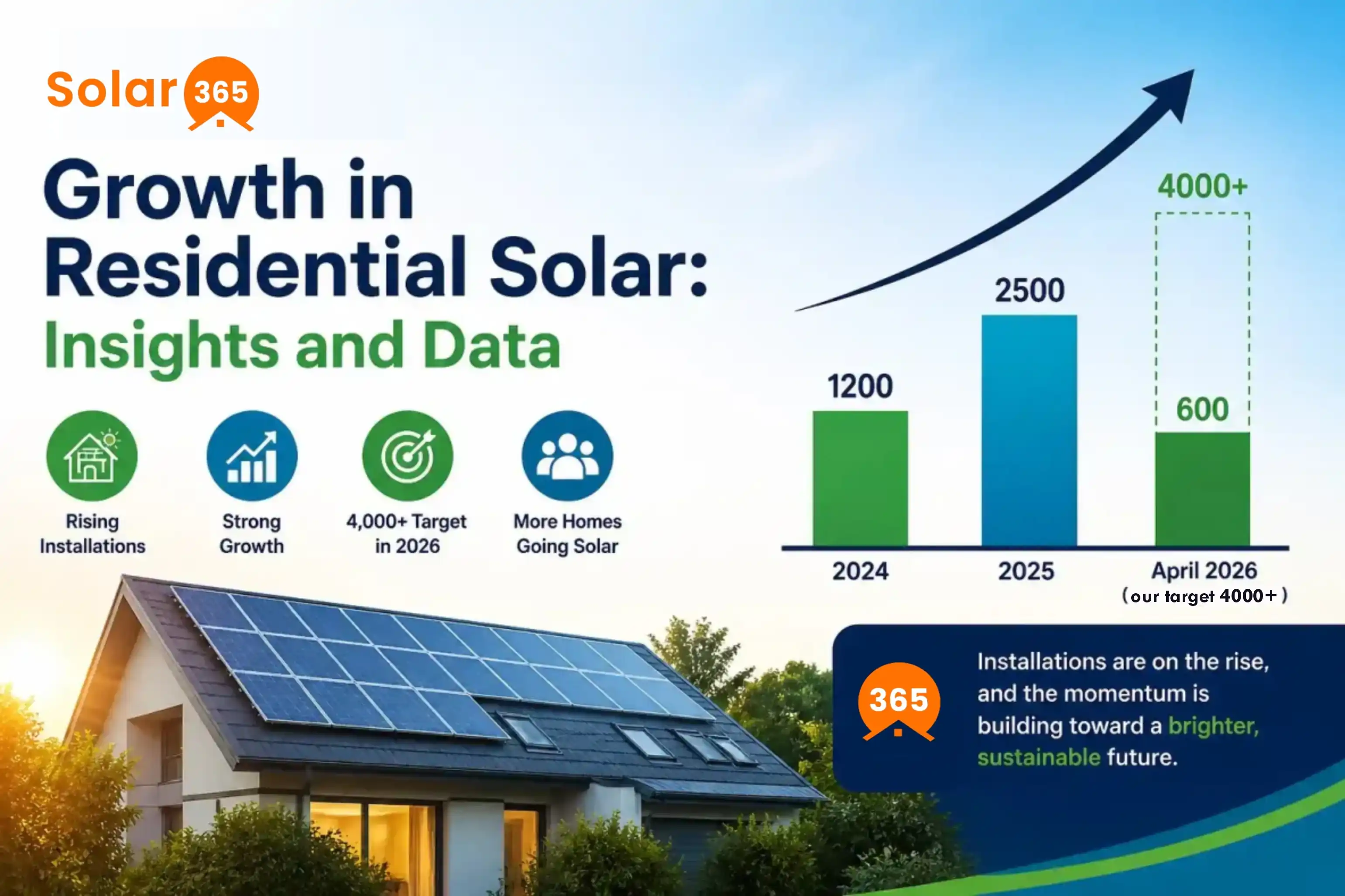
Solar 365’s installation data provides a focused, on-the-ground view of how Australia’s residential solar market is evolving. While national figures highlight large-scale adoption, installer-level insights reveal how demand trends, customer behaviour, and policy changes translate into real installation activity. Based on internal reporting and aligned with broader industry patterns, Solar 365’s data reflects both the growth momentum and short-term fluctuations within the residential solar sector.
Australia’s Residential Total Solar Installations: 2026 Market Overview
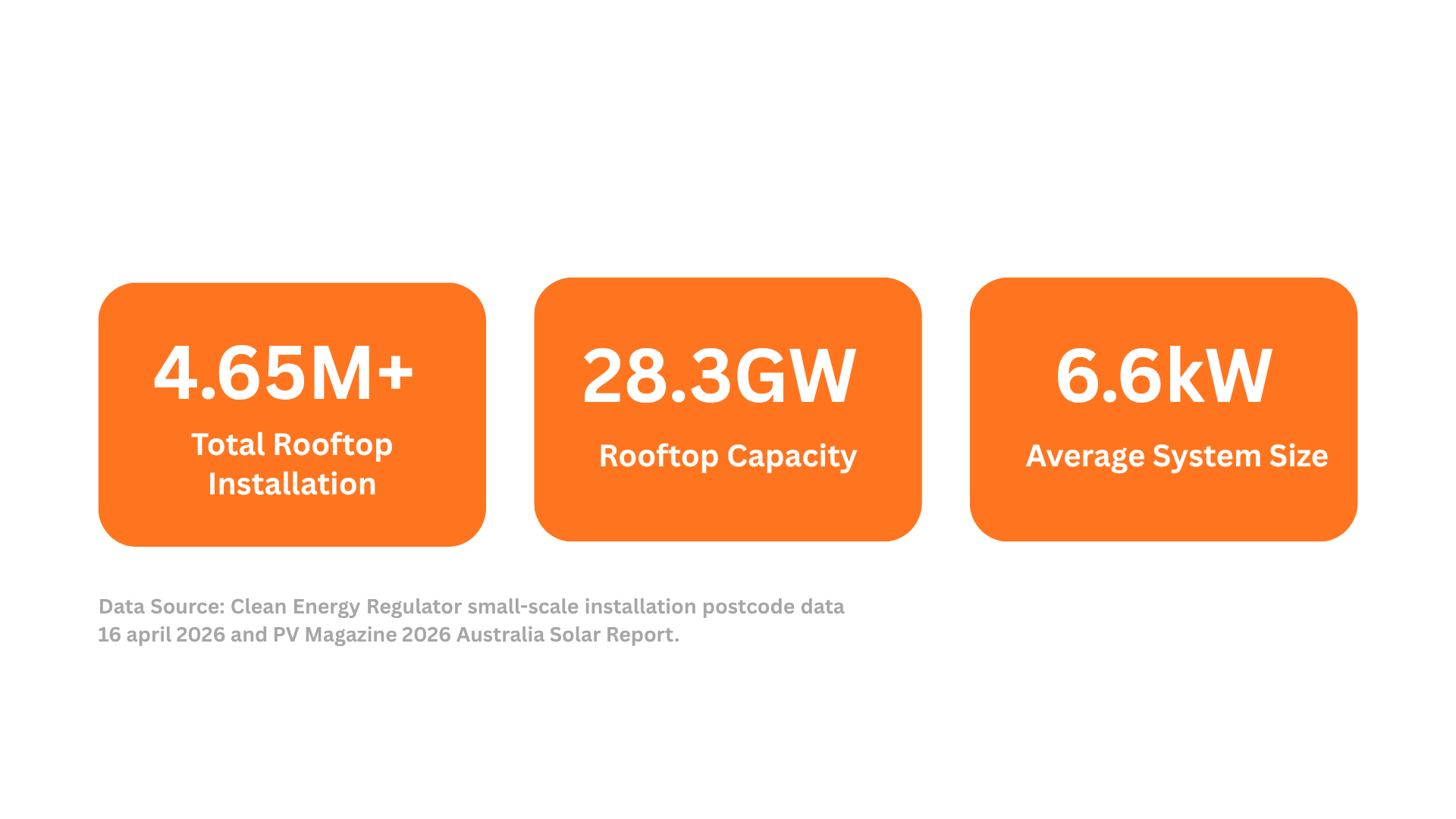
Australia’s residential solar market remains highly active, with approximately 217,000 new installations recorded over the past 12 months. Around 42% of homes are now equipped with rooftop solar, while the average system size of 6.6kW reflects increasing demand for higher-capacity systems.
From a Solar 365 perspective, these national figures provide important context for understanding customer demand. The continued scale of installations indicates that solar remains a mainstream energy solution, with households actively seeking long-term savings and energy independence. The broader market trend also suggests a sustained opportunity for installers operating within residential segments.
Solar 365’s Internal Installation Data
Solar 365’s internal installation data highlights recent activity trends at the company level:
Installation year | Total solar systems installed |
April 2026 | 600 (our target 4000+) |
2025 | 2500 |
2024 | 1200 |
The data shows a strong upward trend in installations, with volumes increasing from 1,200 systems in 2024 to 2,500 systems in 2025, reflecting growing demand and improving market conditions in the residential solar segment. So far in April 2026, about 600 installations have been completed, but with a target of over 4,000 systems in 2026, it’s clear the pace is expected to pick up significantly over the rest of the year, pointing to continued growth and more homeowners adopting solar.
From an operational perspective, this upward trend indicates expanding customer adoption and potentially improved conversion rates, driven by increasing awareness, favourable policy support, and the growing financial attractiveness of solar solutions. The data reflects how installer-level performance can align with broader national trends, while also highlighting the role of company-level execution in capturing market demand.
Conclusion
Recent installation trends indicate continued momentum within Australia’s residential solar sector, with installer-level data reflecting a clear upward shift in activity over recent years. The progression from 1200 installations in 2024 to 4000 installations in 2026 suggests strengthening demand and improving market conditions at the ground level.
Overall, the available insights highlight that Australia’s residential solar market remains in an expansion phase, with installer performance offering a practical reflection of how national trends are translating into real-world adoption.