
What is a Solar Feed-in Tariff in Perth?
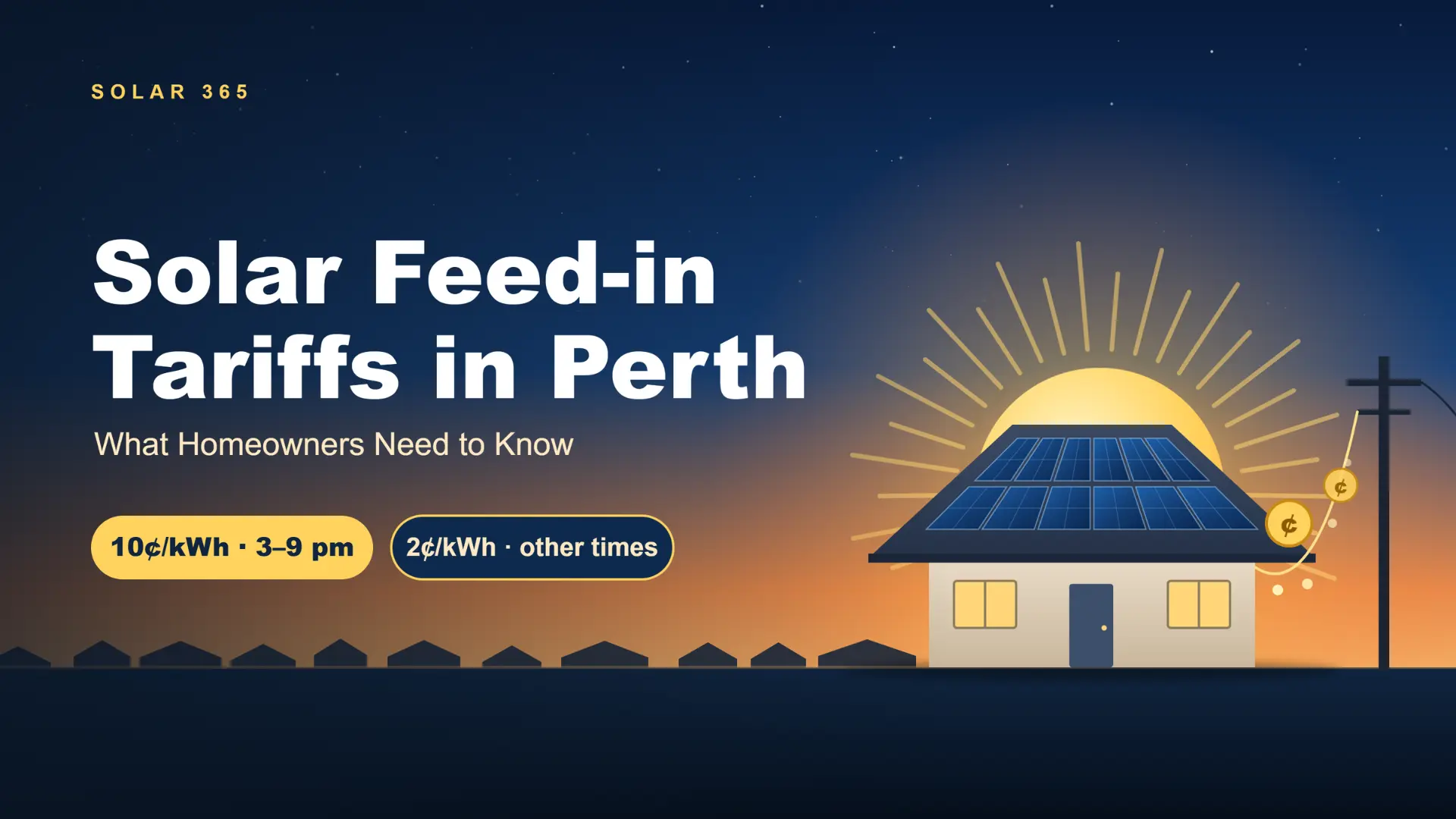
A solar feed-in tariff is the money rate paid by the electricity retailer for surplus electricity generated by a rooftop solar system and exported to the grid. The rate is generally measured in cents per kilowatt-hour (c/kWh).
For example, if a household exports 10 kWh of electricity at 10 cents per kWh, then the household receives a credit of $1.
How homeowners are paid for excess solar exported to the grid:
In Perth, eligible customers generally receive payments under Western Australia’s Distributed Energy Buyback Scheme. The scheme uses different rates based on when electricity is exported, rather than paying the same amount throughout the day.
It's important to understand that a solar feed-in tariff applies to electricity exported to the grid, not to all the electricity produced by the panels. When the electricity is used directly by the household appliances, it reduces the amount of power purchased from the retailer. This can provide greater savings than exporting the same electricity for a relatively low credit.
How Do Solar Feed-in Tariffs Work in Perth?
To understand how solar feed-in tariffs work, here is the process:
Solar Generation: During the daylight hours, rooftop panels generate electricity from sunlight. The amount of electricity they produce depends on the system’s capacity, weather conditions, shading and time of year.
Household Consumption: The electricity generated is first available to power appliances operating in the home. Appliances might include refrigerators, washing machines, air conditioners and other electrical appliances.
Excess Electricity Exported To The Grid: If the panels produce more electricity than the household needs at that time, the surplus electricity can be exported to the grid, subject to property connection and export limits. A compatible battery can store some surplus electricity for later use.
How the Credit Appears On The Electricity Bill: The electricity meter records imports and exports. The retailer applies the relevant buyback rate to eligible exported electricity and shows the resulting credit in the bill.
What Is the Current Feed-in Tariff in Perth?
In Western Australia, eligible customers are paid under the Distributed Energy Buyback Scheme. However, rates may vary between Synergy and Horizon Power customers. The following are the rates as per the WA government’s official energy buyback page from 1 July 2024.
Electricity provider | Export time | Listed rates |
|---|---|---|
Synergy | 3 pm – 9 pm | 10 cents/kWh |
Synergy | 9 pm – 3 pm | 2 cents/kWh |
Horizon Power | 3 pm – 9 pm | 10 cents/kWh |
Horizon Power | 9 pm – 3 pm | 3 cents/kWh |
Source: Government of Western Australia, Energy Buyback Schemes.
Synergy Rates: Synergy supplies electricity to many residential customers in Perth. Under the published DEBS rates, eligible customers receive a higher payment for electricity exported between 3 pm and 9 pm than for exports at other times. This structure encourages households to use their solar electricity during the middle of the day, when it is plentiful, while rewarding exports during the later-afternoon and evening peak periods. The WA government notes that these rates also encourage west-facing panels, which produce more electricity later in the day; see how to orient a building for solar benefit in Perth.
Horizon Power Rates: Horizon Power serves regional areas of Western Australia. Most of its eligible DEBS customers receive 10 cents/kWh during the 3 pm – 9 pm peak period and 3 cents/kWh during other periods. However, some towns may have different rates because electricity generation costs vary by location.
Eligibility and Applicable Plans: DEBS eligibility depends on the customer’s circumstances and the system they installed. The WA government states that eligible residential customers must consume no more than 50 MWh of electricity annually. Systems must also have a generating capacity of between 500 W and 5 kW (a 6.6 kW solar panel system with a 5 kVA inverter qualifies). Customers installing a new system or upgrading an existing one need to arrange the relevant buyback application through Synergy or Horizon Power.
Note That Rates Can Change: DEBS rates are reviewed annually and may change based on electricity prices. Homeowners should check the latest rates from power suppliers on their websites before making a decision.
How Much Can You Earn From Excess Solar?
In Perth, excess solar-generated electricity exported to the grid is paid through the Distributed Energy Buyback Scheme (DEBS). The standard rate is 10 cents/kWh for export between 3 pm and 9 pm and 2 cents/kWh at all other times.
Example of Solar Generation and Exports: Suppose a Perth household has a 6.6kW solar system generating about 25kWh on a sunny day. If the household uses 15 kWh during the day and exports 10 kWh, they receive credits on their electricity bill. This is export earnings. Most of this export occurs before 3 pm, so it typically earns the 2 cents/kWh rate (about 20 cents for 10 kWh) rather than the 10 cents/kWh peak rate.
Why Earnings Depend on Electricity Usage and Export Volume: Your earnings depend on how much electricity you export, not how much your system generates. If your household uses most of its solar power during the day to run appliances, that leaves less electricity to export.
Difference between Solar Savings and Feed-In Tariff Earnings: Solar savings occur when you use solar-generated electricity in your home rather than buying it from Synergy. Feed-in tariff earnings are earned when you send unused solar electricity to the grid; therefore, self-consumption is usually more valuable than exporting to the grid.
Is It Better to Use Solar Power or Export It?
For many Perth households, using solar-generated electricity directly is more valuable than exporting it. This is because the price paid for grid-purchased electricity is generally higher than the buyback rate for surplus electricity exported.
Self-Consumption vs. Exporting: Self-consumption means using solar-generated electricity to power household appliances. Solar-generated electricity can directly reduce your electricity bill.
Why Using Your Solar Electricity At Home Can Be More Valuable Than The Feed-In Tariff: Using your own solar electricity at home is better than exporting it to the grid because it saves you more money than the feed-in tariff. If you use 1 kWh of solar power, you don’t have to buy that electricity from Synergy; if you export 1 kWh, Synergy pays you 2 cents (or 10 cents if exported between 3 pm and 9 pm). So using your solar-generated power is more valuable than a feed-in tariff.
How Batteries Affect Solar Feed-in Tariffs in Perth?
Using Excess Solar To Charge a Battery: A solar battery stores excess electricity generated during the day for later use. Instead of exporting all surplus electricity immediately, a household can store some of it and use it in the evening or when solar production is low.
Exporting Stored Energy: Under a time-based solar feed-in tariff, a compatible battery may also allow a household to export its electricity during a higher rate period. However, this depends on the system’s settings, applicable rules and the household’s energy needs.
When A Battery May Reduce Grid Exports: The battery can reduce grid imports and increase self-consumption. However, it also means less electricity may be exported, resulting in lower feed-in credits. Whether a battery makes financial sense depends on its purchase and installation cost, usable capacity, efficiency, electricity consumption and the difference between the price of grid electricity and the export rate.
How to Maximise the Value of Your Solar in Perth?
Homeowners can take several practical steps to improve the value of their solar system without immediately investing in additional equipment.
Use Appliances During Daylight Hours: Schedule washing machines, dishwashers, pool pumps and other suitable appliances to operate when the panels are generating electricity. The best timing will depend on the system’s production and household needs.
Optimise Solar Self-Consumption: Review when electricity is being generated and used; small changes to daily routine can reduce grid imports and improve the financial benefits of solar.
Consider Battery Storage: A battery may help households store surplus energy for later use. Compare the installed cost, expected savings, warranty and any available incentives before deciding.
Review Your Electricity Plan: Check the applicable buyback rates and electricity charges. A higher solar feed-in tariff does not automatically mean all-around benefits, because usage rates and daily supply charges also matter.
Monitor Solar Production and Exports: Many systems provide an app that shows generation, household consumption, battery activity and electricity exported to the grid. Reviewing these figures can reveal when surplus electricity is available and when weather changes occur; adjusting appliance schedules could help.
Together, these steps can help homeowners make informed decisions about their solar electricity rather than focusing solely on the payments they receive from exports. Solar 365 helps Perth homeowners choose and install solar systems that suit their household’s electricity use.